Weekly updates on the future of mobility
| Company |
Article |
| Hesai, NVIDIA |
Hesai joins NVIDIA Halos safety program to strengthen autonomous system validation |
| Uber, Rivian |
Uber and Rivian plan to bring robotaxis to California |
| Qualcomm, Wayve |
Qualcomm, Wayve Partner to Advance ADAS and Autonomous Driving Systems |
| LiDAR |
China Made LiDAR Cheap. Now Automakers Are Racing to Put It in Your Next Car |
| Automotive AI Market |
Automotive Artificial Intelligence Market Trends: Edge AI, Connected Car Ecosystems & Industry Outlook to 2033 |
| Feautred |
Driverless freight trucks in central Texas
|
|
|
Hesai joins NVIDIA Halos safety program to strengthen autonomous system validation
|
|
|
📌 Hesai strengthens LiDAR safety validation and ecosystem integration by aligning with NVIDIA’s full-stack physical AI framework.
|
|
-
Hesai Technology joined NVIDIA Halos AI Systems Inspection Lab, an ANAB-accredited program for AI system validation.
-
Hesai will validate its LiDAR platforms under a unified framework covering functional safety, cybersecurity, and AI compliance.
-
NVIDIA Halos provides a full-stack safety framework integrating chips, software, tools, and validation for physical AI systems.
-
The platform supports end-to-end autonomous systems across cloud development and in-vehicle computing environments.
-
Safety validation is becoming a critical requirement as autonomous vehicles and robotics scale toward commercialization.
-
LiDAR enables precise 3D perception and real-time hazard detection, playing a key role in autonomous system safety architecture.
-
Hesai has delivered over 2 million LiDAR units globally across ADAS, autonomous driving, and robotics deployments.
-
The partnership builds on long-term collaboration with NVIDIA, including integration with DRIVE AGX Hyperion 10 for Level 4 autonomy.
|
|
|
Uber and Rivian plan to bring robotaxis to California |
|
|
📌 Uber scales its platform-driven robotaxi strategy by partnering with Rivian to deploy large autonomous fleets globally. |
|
-
Uber partnered with Rivian to deploy up to 50,000 robotaxis across the U.S., Canada, and Europe by 2031.
-
Uber will initially purchase 10,000 autonomous Rivian R2 vehicles, with an option to expand by 40,000 more.
-
The robotaxi service will operate exclusively on Uber’s ride-hailing platform.
-
Uber may invest up to $1.25 billion in Rivian, tied to autonomous performance milestones.
-
Initial deployments are planned for San Francisco and Miami in 2028, followed by expansion to 25+ cities.
-
Rivian’s R2 integrates a multi-sensor stack including cameras, radars, and LiDAR for autonomous driving.
-
Uber continues expanding its ecosystem through partnerships with Volkswagen, Lucid, and Waymo.
-
The partnership reflects Uber’s strategy to position itself as a platform provider for robotaxi services.
|
|
|
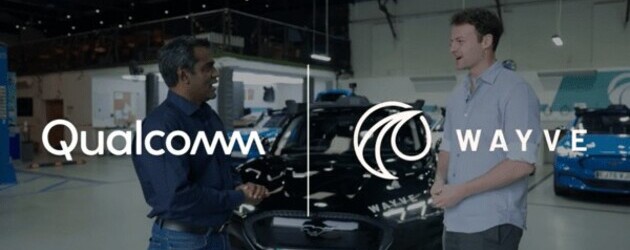
Qualcomm, Wayve Partner to Advance ADAS and Autonomous Driving Systems
|
|
|
📌 Qualcomm and Wayve accelerate adoption of end-to-end AI driving by offering a scalable, pre-integrated autonomous driving platform. |
|
-
Qualcomm partnered with Wayve to commercialize ADAS and autonomous driving systems.
-
Wayve’s end-to-end AI Driver will run on Qualcomm’s Snapdragon Ride platform.
-
Snapdragon Ride integrates high-performance SoC, safety software, and real-time monitoring with system redundancy.
-
Wayve’s E2E model learns from real-world driving data, replacing rule-based and map-dependent approaches.
-
The combined solution supports hands-off and eyes-off autonomy levels.
-
The companies will offer a pre-integrated platform to reduce development time and cost for automakers.
-
The system is designed to scale across multiple vehicle segments from entry-level to premium.
-
The partnership will expand toward Level 4 robotaxi applications using Qualcomm’s compute platform.
|
|
|
China Made LiDAR Cheap. Now Automakers Are Racing to Put It in Your Next Car |
|
|
📌 Rapid cost reduction is driving LiDAR from experimental use to mainstream adoption, reinforcing its role in safe and scalable autonomy.
|
|
-
LiDAR costs dropped from around $50,000 to nearly $200, enabling mass-market adoption.
-
Chinese automakers accelerated LiDAR adoption by scaling production and integrating sensors into EVs.
-
Suppliers such as Hesai and RoboSense increased volume, driving significant cost reductions.
-
LiDAR provides precise 3D mapping and performs reliably in low light, glare, and poor visibility.
-
Falling sensor costs and improved vehicle compute are pushing Western OEMs to adopt LiDAR.
-
Automakers including Rivian, Ford, GM, and Lucid are integrating LiDAR for advanced ADAS and Level 3 autonomy.
-
LiDAR is used as a redundancy layer alongside cameras and radar for safety-critical systems.
-
Tesla continues to pursue a camera-only approach, highlighting an ongoing industry debate.
|
|
|
Automotive Artificial Intelligence Market Trends: Edge AI, Connected Car Ecosystems & Industry Outlook to 2033
|
|
|
📌 Automotive AI is transforming vehicles into software-driven, data-centric platforms, accelerating the shift toward scalable and intelligent mobility systems. |
|
-
The automotive AI market is projected to grow from $5.0B in 2024 to $47.3B by 2033 at a 25.3% CAGR.
-
AI is becoming a core layer across ADAS, SDV, and real-time decision-making systems.
-
Vehicles are evolving into mobile data centers through integration of edge computing and cloud platforms.
-
AI adoption is expanding beyond autonomy into predictive maintenance, in-cabin experiences, and EV energy management.
-
Regulatory mandates such as automatic emergency braking are accelerating AI deployment in safety systems.
-
SDV architectures and OTA updates are enabling continuous feature upgrades and subscription-based revenue models.
-
Advances in edge compute and chiplet design are reducing costs and enabling real-time processing of large sensor data.
-
AI-driven automation is extending across the vehicle lifecycle, including operations, sales, and fleet management.
|
|
|
* This edition was generated with the support of AI and reviewed by an editor. |
|
|
Driverless freight trucks in central Texas |
|
|
VuePoint, published by Vueron Technology, is a weekly newsletter that delivers key updates on the future of mobility—including autonomous driving, smart infrastructure, urban innovation, and LiDAR technology.
Starting with its LiDAR perception solutions, Vueron Technology is realizing AI-driven innovations in the mobility paradigm to create a safer world.
|
|
|
How did you like today's Mobility Weekly? |
|
|
|
Vueron Technology | mkt@vueron.com
2033 Gateway Place, Suite 500, San Jose, CA 95110, US
|
|
|
|