Weekly updates on the future of mobility
| Company |
Article |
| WeRide, Geely |
WeRide and Geely’s Farizon prepare to scale AV production |
| Wayve, Uber, Nissan |
Wayve, Uber and Nissan Announce Collaboration on Robotaxis |
| Lucid |
Lucid Motors shows off robotaxi concept called ‘Lunar’ |
| Plus AI |
PlusAI unveils major upgrade to autonomous trucking platform |
| RoboSense, Baidu |
RoboSense And Baidu Partnership: Powering The Next Generation Of Autonomous Robotaxis |
| Feautred |
New 2026 Toyota Camry vs the World's Toughest Self-Driving Test!
|
|
|
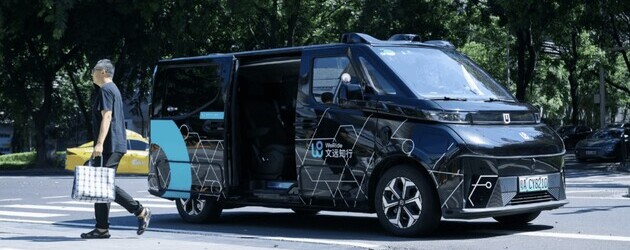
WeRide and Geely’s Farizon prepare to scale AV production
|
|
|
📌 WeRide and Geely’s Farizon will produce 2,000 Robotaxi GXR units in 2026, marking a key step toward large-scale robotaxi deployment.
|
|
-
WeRide and Geely’s commercial vehicle arm Farizon agreed to deliver 2,000 Robotaxi GXR vehicles in 2026, with production scheduled to begin in Q3.
-
The deployment would expand WeRide’s global robotaxi fleet to more than 2,600 vehicles by the end of the year, up from about 1,000 units as of January.
-
The Robotaxi GXR runs WeRide’s Gen8 autonomous driving system centered on a 1,000-line LiDAR with a 600-meter detection range.
-
Farizon’s drive-by-wire SV chassis reduces assembly time from about one hour to under ten minutes and is expected to cut vehicle costs by roughly 15%.
-
The 2,000-unit production target will test WeRide’s ability to scale robotaxi manufacturing as the company aims to deploy tens of thousands of vehicles by 2030.
-
WeRide currently operates robotaxi services in Chinese cities such as Beijing and Guangzhou and launched its first overseas service in Abu Dhabi last year.
-
The company plans additional deployments in Dubai and is expanding testing and services across several European markets.
-
China’s autonomous driving sector is accelerating production, with Pony.ai scaling vehicles with GAC and Toyota while Baidu promotes its RT6 robotaxi platform for global markets.
|
|
|
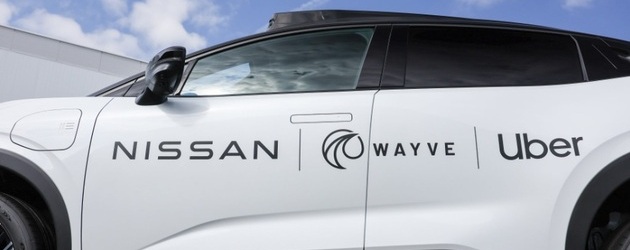
Wayve, Uber and Nissan Announce Collaboration on Robotaxis |
|
|
📌 Wayve, Uber and Nissan will launch a robotaxi pilot in Tokyo using Nissan LEAF vehicles powered by Wayve’s AI Driver and operating on the Uber platform. |
|
-
Wayve, Uber and Nissan signed a memorandum of understanding to collaborate on robotaxi development and deployment.
-
The companies plan a robotaxi pilot in Tokyo by late 2026, subject to discussions with relevant authorities.
-
The pilot will use Nissan LEAF vehicles equipped with Wayve’s end-to-end AI autonomous driving system.
-
Vehicles will operate on the Uber network and initially include a trained safety operator during early deployments.
-
The partnership marks Uber’s first autonomous vehicle collaboration in Japan.
-
The initiative forms part of Wayve and Uber’s broader robotaxi rollout planned across more than ten cities, including London.
-
Wayve’s AI Driver learns from real-world driving data and can operate without relying on HD maps.
-
The companies aim to combine Wayve’s AI software, Nissan vehicles and Uber’s mobility platform to expand autonomous ride-hailing globally.
|
|
|
Lucid Motors shows off robotaxi concept called ‘Lunar’
|
|
|
📌 Lucid introduced the Lunar robotaxi concept and outlined plans for robotaxi partnerships and autonomy subscription services. |
|
-
Lucid Motors revealed a two-seat robotaxi concept called Lucid Lunar during its investor day in New York.
-
The vehicle has no steering wheel or pedals and is designed on the same platform as Lucid’s upcoming mid-size EV lineup.
-
Lucid clarified that the dedicated robotaxi is still a concept and is not currently under active development.
-
The company is close to reaching an agreement with Uber to collaborate on a robotaxi based on its mid-size vehicle platform.
-
Lucid is also working with Nuro to launch an autonomous version of the Gravity SUV on the Uber network in San Francisco by the end of the year.
-
The company expects robotaxi partnerships to become a significant revenue stream alongside its EV business.
-
Lucid plans to introduce subscription pricing for its DreamDrive Pro driver-assistance system starting in the first half of 2027.
-
Monthly subscriptions are expected to range from $69 for basic driver assistance to $199 for advanced self-driving capability.
|
|
|
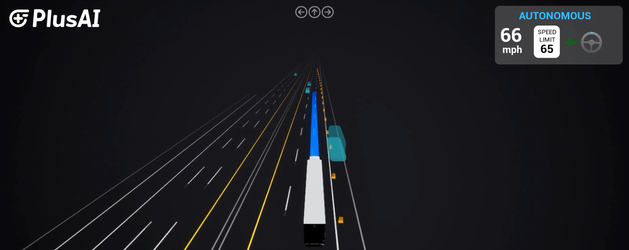
PlusAI unveils major upgrade to autonomous trucking platform |
|
|
📌 PlusAI introduced SuperDrive 6.0 with night driving and construction-zone handling as it moves toward fully driverless commercial trucking by 2027.
|
|
-
PlusAI released SuperDrive 6.0, adding night driving and construction-zone handling to its autonomous trucking platform.
-
The new capabilities aim to enable continuous 24/7 driverless freight operations across long-haul routes.
-
Autonomous trucks using SuperDrive 6.0 are already hauling commercial loads in Texas, with night driving deployment expected in the coming weeks.
-
PlusAI has logged more than 7 million miles of autonomous driving across the United States, Europe and Asia.
-
The system introduces a Transformer-based “Reflex” layer within the PlusAI AV 2.0 architecture for perception and motion forecasting.
-
The motion forecasting model doubles trajectory prediction accuracy for dynamic road actors such as merging vehicles and pedestrians.
-
The platform runs on distributed compute systems using NVIDIA DRIVE Orin and Thor processors.
-
PlusAI reduced AI training time by 10x and cut data labeling costs by two-thirds using auto-labeling and reinforcement learning techniques.
|
|
|
RoboSense And Baidu Partnership: Powering The Next Generation Of Autonomous Robotaxis
|
|
|
📌 RoboSense will supply LiDAR sensors for Baidu’s next-generation Apollo Go robotaxi vehicles to support large-scale Level 4 deployment. |
|
-
RoboSense secured an exclusive design win to supply LiDAR systems for Baidu’s next-generation Apollo Go robotaxi fleet.
-
The solution combines RoboSense EM4 digital LiDAR with E1 solid-state LiDAR to deliver 360-degree perception coverage.
-
The dual-LiDAR architecture supports Level 4 autonomous driving by improving environmental awareness and reducing blind spots.
-
Baidu’s Apollo Go robotaxi platform has already completed millions of autonomous ride-hailing trips across multiple cities.
-
The partnership aims to support factory-built robotaxi fleets designed for large-scale deployment.
-
LiDAR provides precise 3D spatial mapping that enables reliable object detection in low-light and complex urban environments.
-
Robotaxi systems rely on sensor fusion combining LiDAR, radar, cameras and other sensors to interpret driving conditions.
-
The collaboration highlights the growing role of LiDAR and sensor technologies in scaling autonomous mobility services globally.
|
|
|
* This edition was generated with the support of AI and reviewed by an editor. |
|
|
New 2026 Toyota Camry vs the World's Toughest Self-Driving Test! |
|
|
VuePoint, published by Vueron Technology, is a weekly newsletter that delivers key updates on the future of mobility—including autonomous driving, smart infrastructure, urban innovation, and LiDAR technology.
Starting with its LiDAR perception solutions, Vueron Technology is realizing AI-driven innovations in the mobility paradigm to create a safer world.
|
|
|
How did you like today's Mobility Weekly? |
|
|
|
Vueron Technology | mkt@vueron.com
2033 Gateway Place, Suite 500, San Jose, CA 95110, US
|
|
|
|