Weekly updates on the future of mobility
| Company |
Article |
| Hyundai, Kia, NVIDIA |
Hyundai, Kia deepen NVIDIA autonomous alliance |
| Uber, Pony.ai, Verne |
Uber, Pony.ai, Verne plan Europe's first robotaxi launch |
| Omnivision |
Omnivision Drives Sensor S-Curve Forward as Autonomous Technology Moves Toward Trust-Based Engineering |
| RoboSense |
RoboSense Showcases Digital LiDAR Portfolio for Industrial Robotics at LogiMAT 2026 |
| Xiaomi |
Updated Xiaomi SU7 to Get Lidar, 900+ km Range and 15‑Minute Charging |
| Feautred |
Waymo Self Driving Vehicle to and from SeaWorld Orlando
|
|
|
Hyundai, Kia deepen NVIDIA autonomous alliance
|
|
|
📌 Hyundai Motor Group is accelerating data-driven autonomous driving by integrating SDV architecture with NVIDIA’s AI platform to build a scalable, continuous learning system.
|
|
-
Hyundai Motor Company and Kia Corporation expanded their partnership with NVIDIA to accelerate next-generation autonomous driving development.
-
The collaboration combines Hyundai Motor Group’s SDV capabilities with NVIDIA’s AI and accelerated computing platforms.
-
The companies will integrate NVIDIA autonomous driving systems into production vehicles, starting with Level 2+ ADAS.
-
NVIDIA Drive Hyperion will serve as a unified hardware-software platform scalable from Level 2 to Level 4 autonomy.
-
Hyundai Motor Group will build a data-driven development loop by leveraging fleet data for AI model training and continuous improvement.
-
The strategy reflects a broader shift toward data-centric autonomy, where large-scale real-world data becomes a key competitive advantage.
-
The partnership extends to robotaxi development through Motional, supporting Level 4 autonomous mobility services.
-
The collaboration highlights the convergence of SDV architecture, AI computing, and vehicle platforms into a single integrated system.
|
|
|
Uber, Pony.ai, Verne plan Europe's first robotaxi launch |
|
|
📌 Uber, Pony.ai, and Verne are advancing robotaxi commercialization in Europe through a platform-driven, multi-partner deployment model. |
|
-
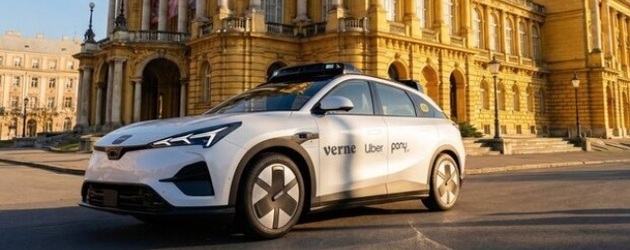
Uber partnered with Pony.ai and Verne to launch Europe’s first commercial robotaxi service in Zagreb.
-
The collaboration combines Uber’s ride-hailing platform, Pony.ai’s autonomous driving technology, and Verne’s fleet operations.
-
Pony.ai will supply the self-driving system, while Verne will own and operate the vehicle fleet.
-
Uber will integrate the robotaxi service into its global app alongside Verne’s local platform.
-
The companies plan to scale from Zagreb to other European cities with a fleet of thousands of robotaxis.
-
Public-road testing has already begun, with preparations underway for fare-charging operations.
-
Verne will lead regulatory approvals and coordinate deployment across both platforms.
-
Uber continues to expand its autonomous ecosystem through partnerships across robotaxis, trucking, delivery, and drones.
|
|
|
Omnivision Drives Sensor S-Curve Forward as Autonomous Technology Moves Toward Trust-Based Engineering
|
|
|
📌 Autonomous driving is shifting toward integrated perception platforms and human-centric design, where trust and cost will determine large-scale adoption. |
|
-
Optical coherence tomography (OCT) principles are being adapted to autonomous vehicle sensing, enabling a new generation of perception systems.
-
FMCW LiDAR derived from OCT improves accuracy, data speed, and robustness under challenging lighting conditions.
-
Replacing rotating mirrors with diffraction gratings expands field of view while maintaining depth precision.
-
Advanced perception requires integration of LiDAR, radar, cameras, and V2V communication into a unified platform.
-
LED flicker and complex urban visuals highlight the need for specialized camera processing alongside LiDAR.
-
Public trust remains a major barrier, with up to 63% of pedestrians expressing discomfort with autonomous vehicles.
-
Human-machine interface innovations, such as Jaguar’s “virtual eyes,” aim to improve communication with pedestrians.
-
Cost reduction and regulatory support are key drivers for scaling autonomous vehicle adoption.
|
|
|
RoboSense Showcases Digital LiDAR Portfolio for Industrial Robotics at LogiMAT 2026 |
|
|
📌 RoboSense is expanding into industrial robotics by positioning its digital LiDAR as an ecosystem-integrated perception solution beyond automotive.
|
|
-
RoboSense showcased its full digital LiDAR portfolio at LogiMAT 2026, targeting industrial robotics and autonomous logistics applications.
-
The company demonstrated a 3D industrial safety LiDAR along with ultra-mini high-precision sensors for robotics use cases.
-
Its LiDAR solutions were integrated into partner robots across warehousing, material handling, commercial cleaning, and logistics.
-
RoboSense is positioning itself as a “perception partner” by embedding sensors into broader robotics ecosystems.
-
The strategy signals a shift from standalone hardware sales toward ecosystem-driven deployment models.
-
Industrial automation and warehouse robotics are emerging as key growth markets for LiDAR adoption.
-
Safety-critical applications offer higher value potential but require strict performance and reliability standards.
-
RoboSense faces ongoing competition from camera, radar, and alternative sensor technologies as the market matures.
|
|
|
Updated Xiaomi SU7 to Get Lidar, 900+ km Range and 15‑Minute Charging
|
|
|
📌 Xiaomi is pushing aggressive EV innovation by standardizing LiDAR and high-performance computing in its next-generation SU7. |
|
-
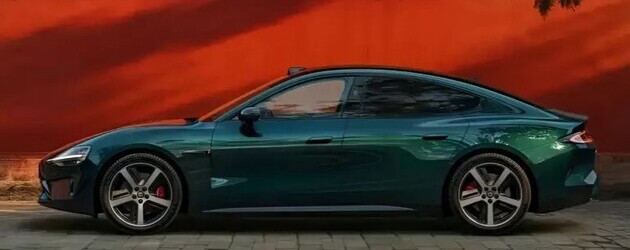
Xiaomi is preparing to launch the next-generation SU7 EV, with mass deliveries starting immediately after unveiling.
-
Production is ramping up to around 16,000 units in March, signaling aggressive scaling.
-
The updated SU7 includes redesigned exterior elements and enhanced lighting, including a 400-meter high beam.
-
All variants come equipped with LiDAR and 4D millimeter-wave radar as standard.
-
A 700 TOPS computing platform enables perception in low light, fog, and partially obstructed environments.
-
The lineup features three trims with high-voltage architectures up to 897V and fast-charging capabilities.
-
The Pro model targets over 900 km CLTC range, while the Max supports ultra-fast charging with 670 km recovery in 15 minutes.
-
Xiaomi is positioning LiDAR and high-voltage architecture as key differentiators in China’s competitive EV market.
|
|
|
* This edition was generated with the support of AI and reviewed by an editor. |
|
|
Waymo Self Driving Vehicle to and from SeaWorld Orlando |
|
|
VuePoint, published by Vueron Technology, is a weekly newsletter that delivers key updates on the future of mobility—including autonomous driving, smart infrastructure, urban innovation, and LiDAR technology.
Starting with its LiDAR perception solutions, Vueron Technology is realizing AI-driven innovations in the mobility paradigm to create a safer world.
|
|
|
How did you like today's Mobility Weekly? |
|
|
|
Vueron Technology | mkt@vueron.com
2033 Gateway Place, Suite 500, San Jose, CA 95110, US
|
|
|
|