Weekly updates on the future of mobility
| Company |
Article |
| Ouster |
Ouster Acquisition Of StereoLabs Aims At Full Stack Physical AI |
| Wayve |
UK Self-Driving Star Wayve Hits $8.6B Valuation, Eyes UK Robotaxi Pilot |
| Huawei, Xpeng |
Huawei strengthens its hardware, while XPeng breaks through with algorithms. Who will define the future of intelligent driving? |
| Harbinger, Phantom AI |
Harbinger acquires autonomous driving company Phantom AI |
| Aeva |
Aeva Selected by Top 5 Global Passenger OEM for Vehicle Development Program |
| Feautred |
Self Driving Comparison - Who Does it Best in 2026?
|
|
|
Ouster Acquisition Of StereoLabs Aims At Full Stack Physical AI
|
|
|
📌 Ouster completed the acquisition of StereoLabs to combine LiDAR, AI vision, and 3D cameras into a unified sensing and perception platform targeting Physical AI applications.
|
|
-
Ouster completed the acquisition of StereoLabs, a developer of AI vision and 3D camera technologies.
-
The deal combines StereoLabs’ perception software and camera systems with Ouster’s digital LiDAR sensors.
-
Ouster plans to build a unified sensing and perception platform targeting Physical AI applications.
-
The platform integrates LiDAR, AI vision, 3D cameras, and on-device AI compute into a single sensing pipeline.
-
Ouster targets robotics, industrial automation, and smart infrastructure markets requiring integrated perception systems.
-
StereoLabs adds a developer ecosystem of more than 10,000 customers and over 90,000 deployed ZED cameras.
-
The acquisition expands Ouster’s strategy from LiDAR hardware supply toward a broader sensing and perception platform.
|
|
|
UK Self-Driving Star Wayve Hits $8.6B Valuation, Eyes UK Robotaxi Pilot |
|
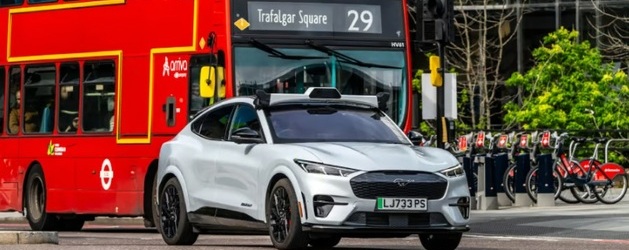
|
📌 Wayve raised $1.2B at an $8.6B valuation as the UK prepares to launch its first robotaxi trials in London. |
|
-
Wayve raised $1.2 billion in funding, reaching an $8.6 billion valuation.
-
The funding round included automakers Mercedes-Benz, Stellantis, and Nissan.
-
Nissan previously announced a partnership with Wayve to integrate its autonomous driving technology.
-
Wayve plans to participate in the UK’s first robotaxi trials scheduled to begin in London.
-
Competitors in the pilot may include Waymo and ride-hailing platforms Uber and Lyft.
-
Wayve plans to supply autonomous driving software for both robotaxi fleets and private vehicles.
-
The UK government aims to position London as a major European hub for autonomous vehicle testing.
|
|
|
Huawei strengthens its hardware, while XPeng breaks through with algorithms. Who will define the future of intelligent driving?
|
|
|
📌 Huawei and XPeng introduced new technologies highlighting diverging paths toward L4 autonomous driving in China. |
|
-
China’s intelligent vehicle sector entered a period of rapid technology competition in early March.
-
XPeng released its second-generation VLA model combining vision, language, and action for autonomous driving.
-
Huawei introduced an 896-line LiDAR designed to improve detection of small and irregular obstacles.
-
The LiDAR uses a dual-optical-path architecture enabling higher resolution perception and longer detection range.
-
Huawei promotes hardware redundancy using LiDAR and multi-sensor fusion to improve autonomous driving safety.
-
XPeng focuses on multimodal AI models aiming to evolve from Level 2 directly toward Level 4 autonomy.
-
Chinese automakers including Li Auto, NIO, and BYD are accelerating development of intelligent driving systems.
|
|
|
Harbinger acquires autonomous driving company Phantom AI |
|
|
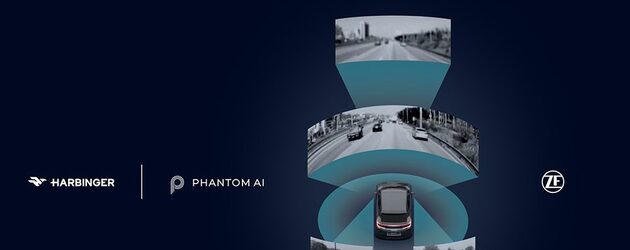
📌 Harbinger acquired Phantom AI to integrate computer vision ADAS into its EV trucks and expand software licensing with ZF.
|
|
-
Harbinger acquired autonomous driving company Phantom AI to strengthen its ADAS capabilities.
-
Phantom AI’s team will continue operating in Mountain View, California after the acquisition.
-
Harbinger plans to integrate Phantom AI’s computer vision into its medium-duty electric vehicles.
-
The technology enables ADAS features including emergency braking, adaptive cruise control, and lane keeping.
-
Harbinger and ZF plan to license Phantom AI’s computer vision for passenger vehicle ADAS systems.
-
The partnership creates a new software services revenue stream beyond Harbinger’s commercial vehicle business.
-
The combined platform targets improved safety and automation in the medium-duty fleet segment.
|
|
|
Aeva Selected by Top 5 Global Passenger OEM for Vehicle Development Program
|
|
|
📌 Aeva’s Atlas Ultra 4D LiDAR was selected for a vehicle development program with a top global OEM. |
|
-
Aeva was selected by a top five global passenger OEM for a vehicle development program.
-
The program focuses on integrating Aeva’s Atlas Ultra 4D LiDAR into next-generation vehicle platforms.
-
The platform will support global production vehicles across multiple brands within the OEM group.
-
Atlas Ultra detects both range and velocity simultaneously for improved perception performance.
-
The sensor provides high-resolution detection with ranges of up to 500 meters.
-
Aeva designed the LiDAR for highway-speed and urban automated driving applications.
-
Aeva expects a potential large-scale production award following completion of the development program.
|
|
|
* This edition was generated with the support of AI and reviewed by an editor. |
|
|
Self Driving Comparison - Who Does it Best in 2026? |
|
|
VuePoint, published by Vueron Technology, is a weekly newsletter that delivers key updates on the future of mobility—including autonomous driving, smart infrastructure, urban innovation, and LiDAR technology.
Starting with its LiDAR perception solutions, Vueron Technology is realizing AI-driven innovations in the mobility paradigm to create a safer world.
|
|
|
How did you like today's Mobility Weekly? |
|
|
|
Vueron Technology | mkt@vueron.com
2033 Gateway Place, Suite 500, San Jose, CA 95110, US
|
|
|
|